Working with Words: Building Phonics and Sight Words

In this area we work on two skills – phonics and sight words. The same flow chart that we used for Working with Letters and Sounds continues through to Working with Words. An additional resource is the Working with Letters, Sounds and Words Continuum Guide for Teaching – and you can access both of these below.
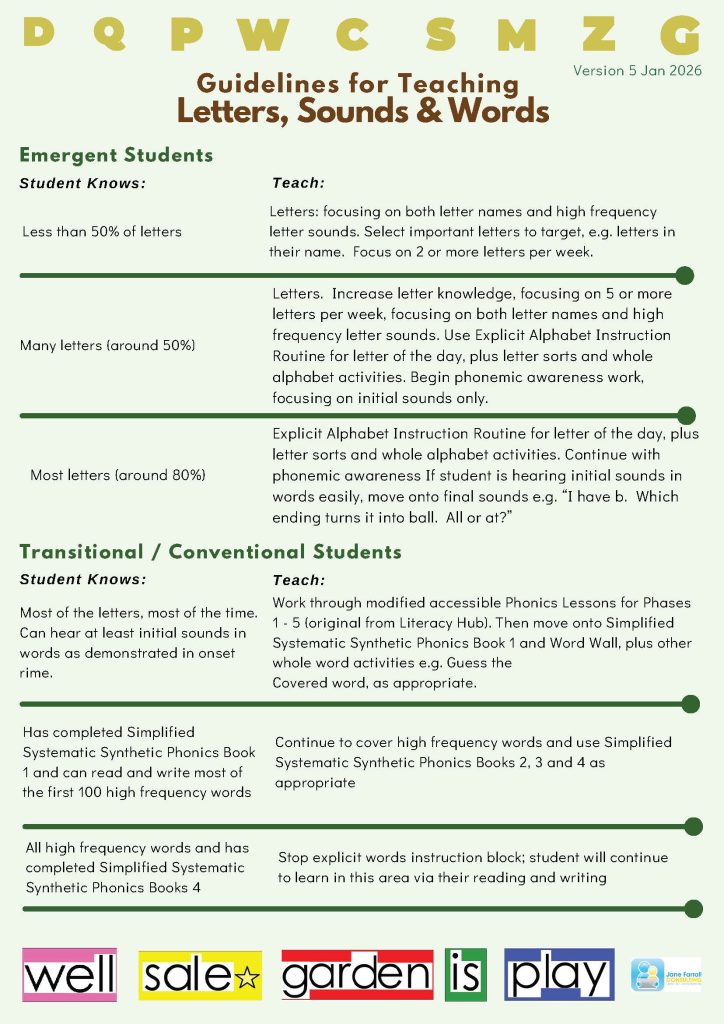
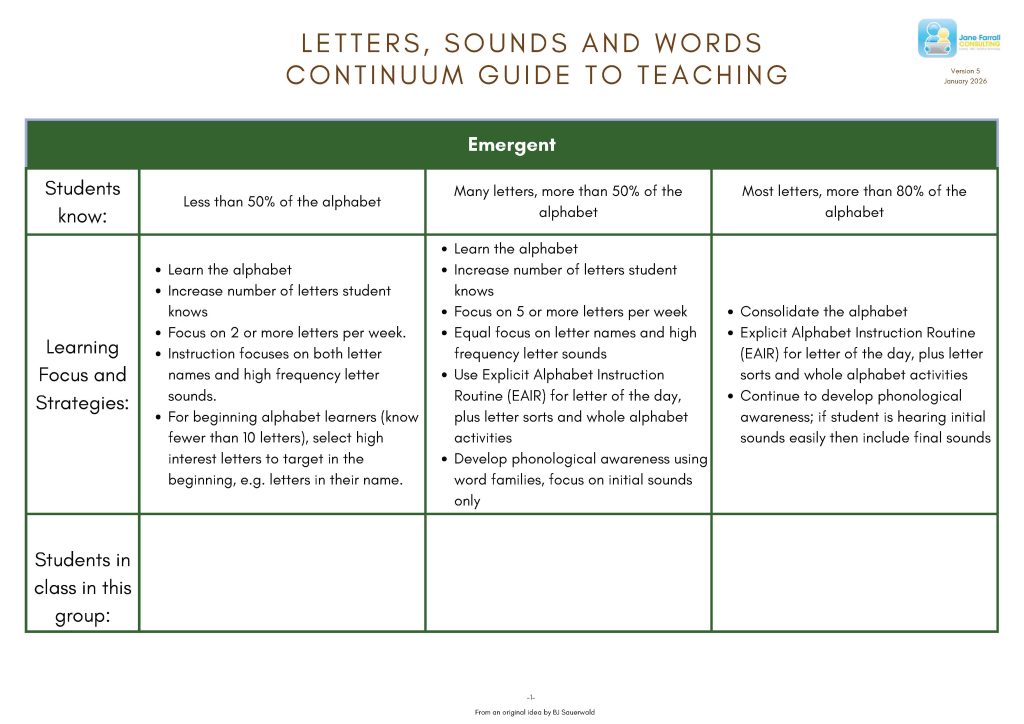
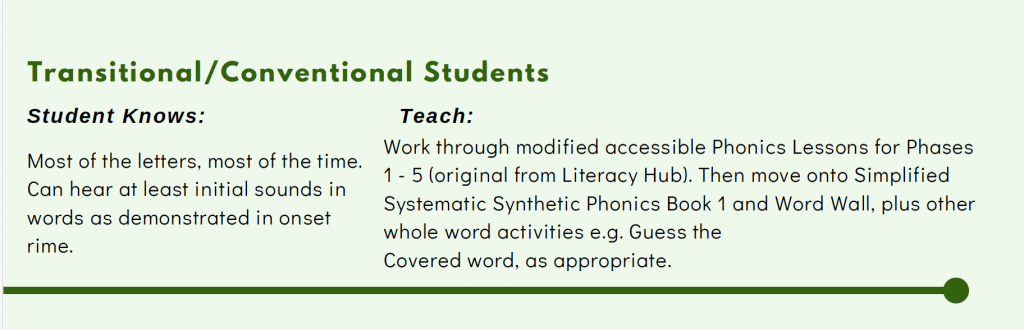
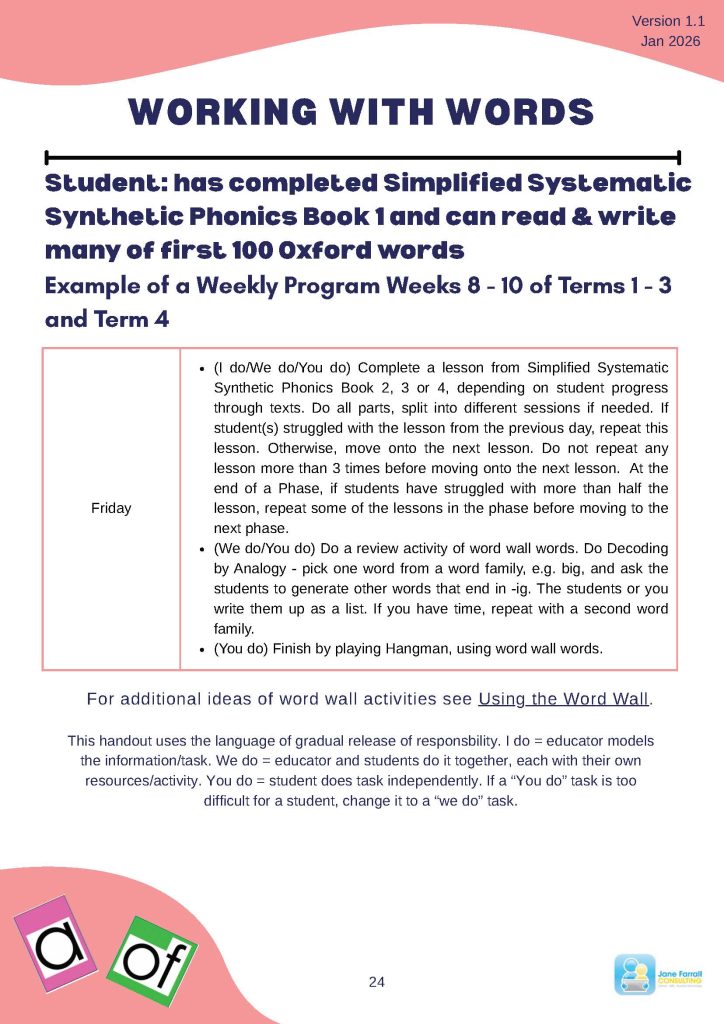
Working with Words Level 1 Handout
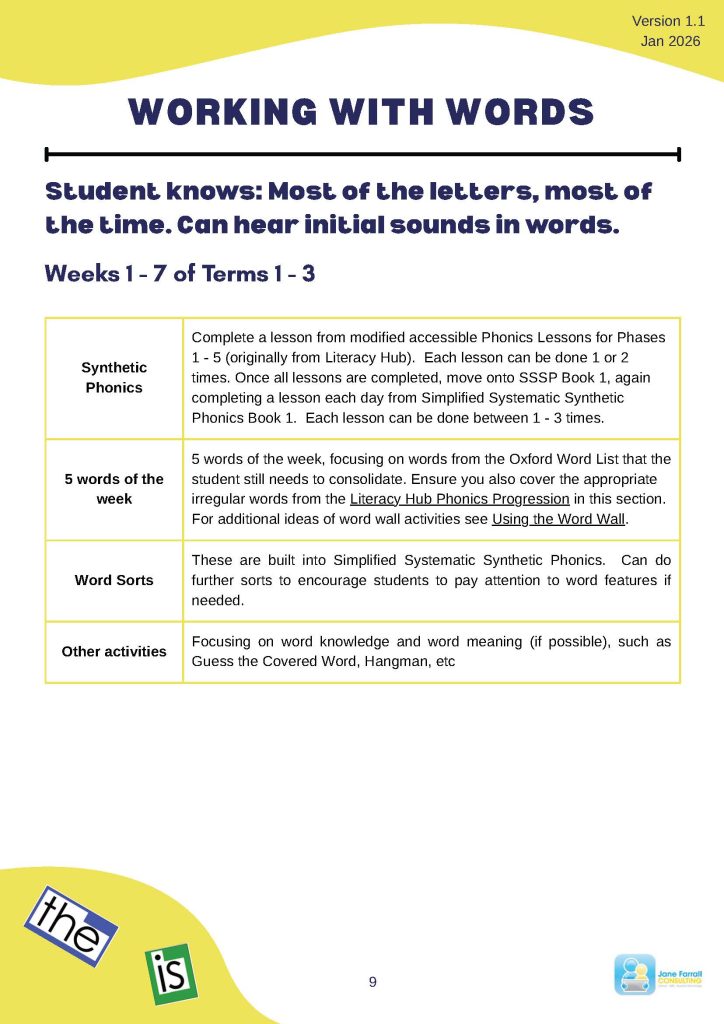
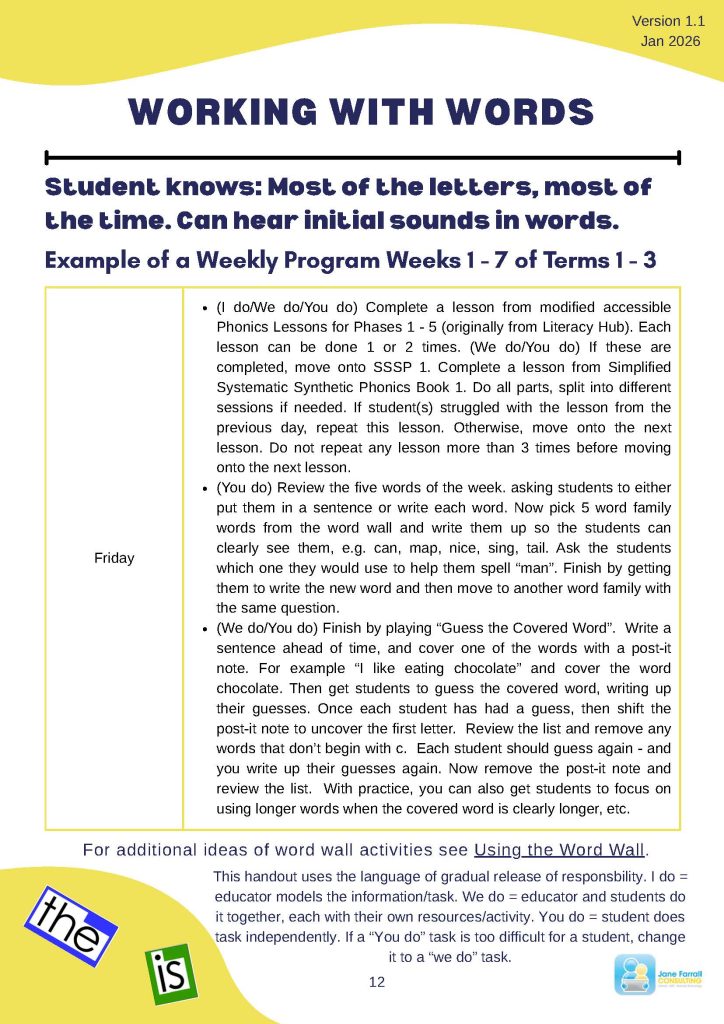
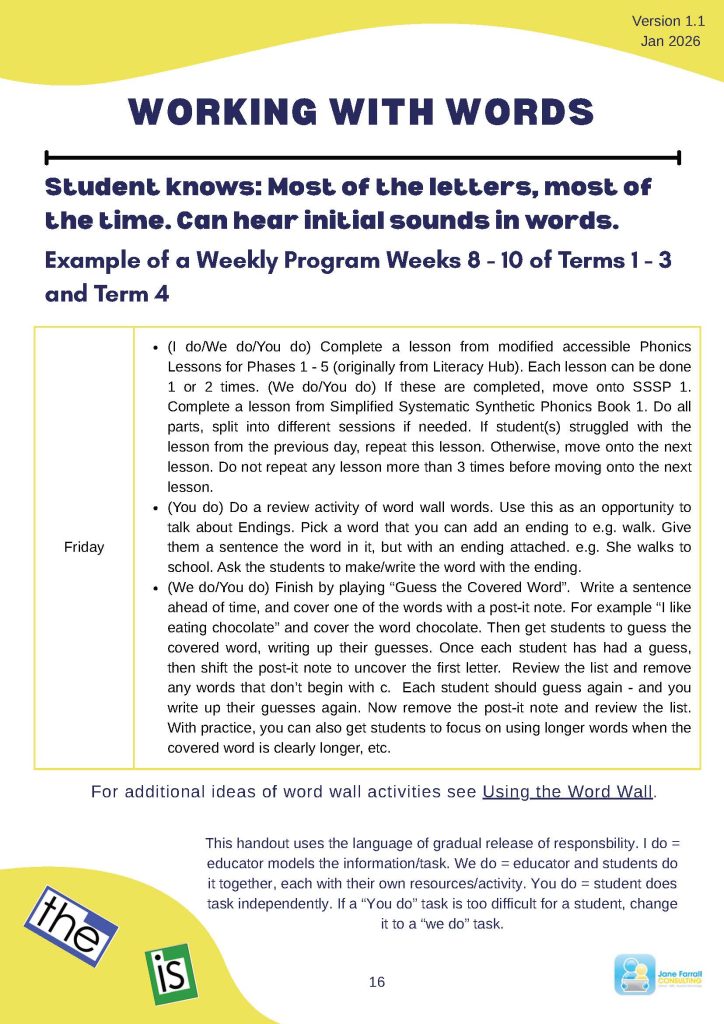
Working with Words Level 2 Handout
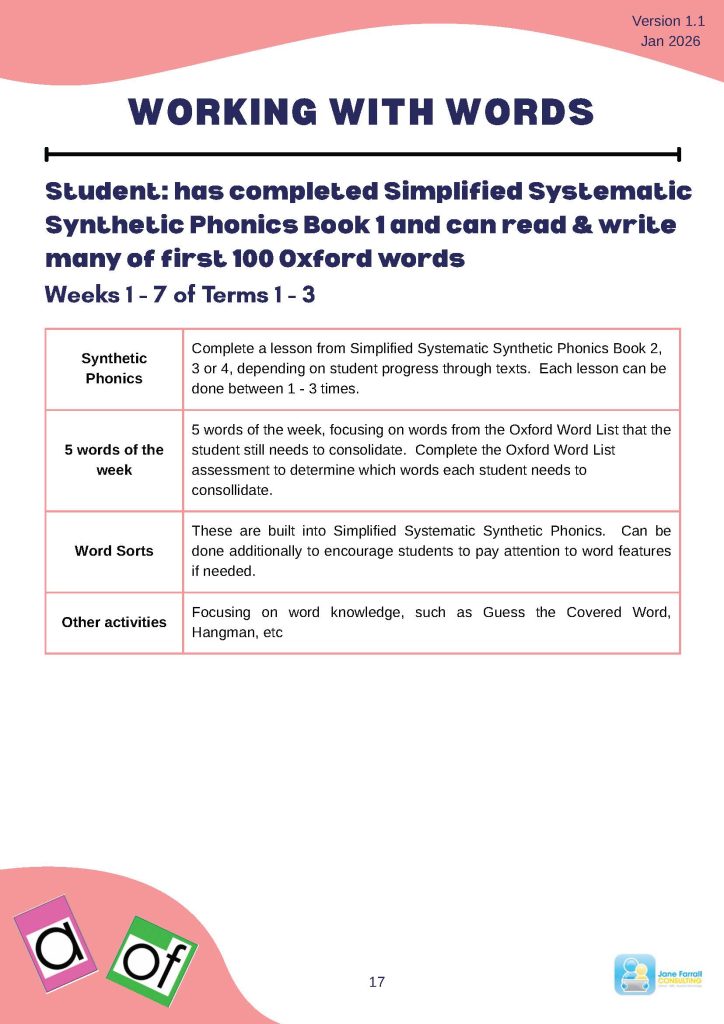
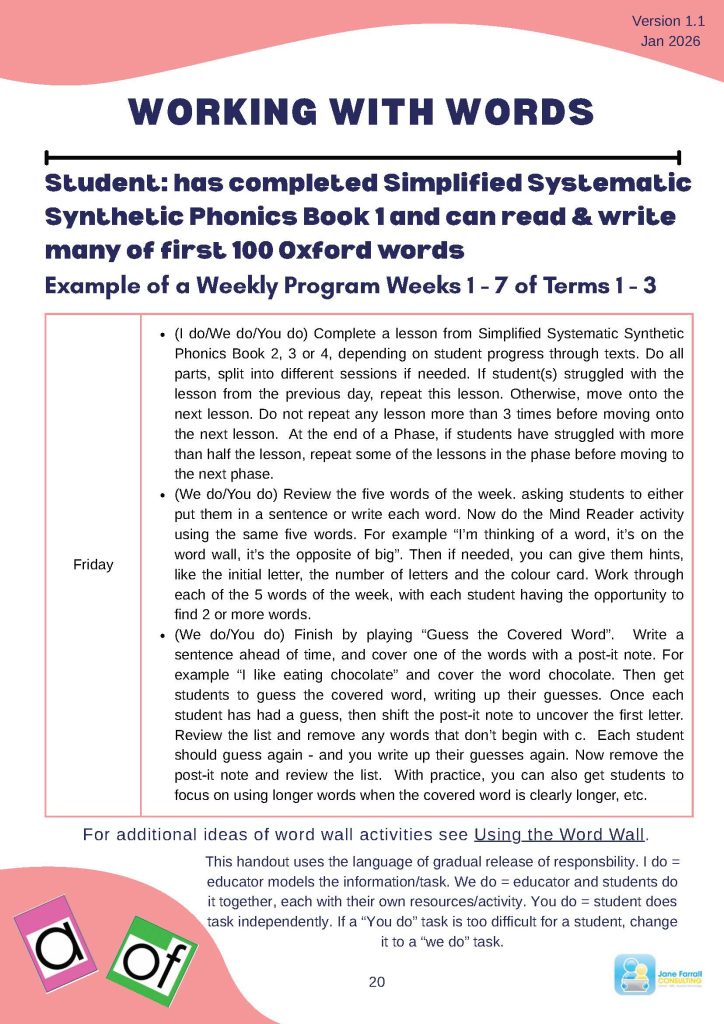
Phonics
This is an area of lots of discussion in literacy instruction at the moment, with an increasing amount of research around how to teach phonics. We also have some research with individuals with intellectual disability showing how we need to minimise the metalinguistics in phonics programs (or other programs) for them to be successful. On this page, I am going to cover the program recommended by Erickson & Koppenhaver (2020), which has been successful with a lot of students with CCN and intellectual disability. I am aware that there will be some students for whom you may need to trial an additional program – and that many schools are trialling other approaches. As you select a program for use, keep in mind that we need an approach that does not require students to:
- pronounce individual letter names, sounds or words
- learn rules
- use their mouth to talk
Synthetic Phonics program based on Making Words
I have written the texts below based on the letter sound sequence recommended by the Literacy Hub in their phonics progression and on the structure used for teaching phonics in the Making Words approach (see below). In the long term. This will eventually be a four book sequence accompanied by decodable readers. Currently Books 1, 2 and 3 are complete – and these cover the first 18 phases of the Literacy Hub’s phonics progression. You can download these below. Additionally, there are some modified resources from the Literacy Hub which are I have modified to be more inclusive of our students than the original. For example, I have provided alternatives for students who need AAC or for whom handwriting is difficult and prevents them focusing on the phonics skills.
Literacy Hub Lesson Packs Modified
The Literacy Hub has released a series of lesson packs for teachers. For the earlier phases these cover letter sounds and introduce students to blending and segmenting, as well as some early work on decodable words. For many students these are a great step between EAIR and onset rime, and moving to a more comprehensive phonics program.
- Overall handout re implementation (updated October 2026)
- Combined teacher instructions for all modified lessons
- Phase 1 lessons
- Phase 2 lessons
- Phase 3 lessons
- Phase 4 lessons
- Phase 5 lessons
- I will not be modifying further phases as I believe these are well covered by Simplified Systematic Synthetic Phonics – but you can access them directly from the Literacy Hub website if desired.
Tile Keyboard
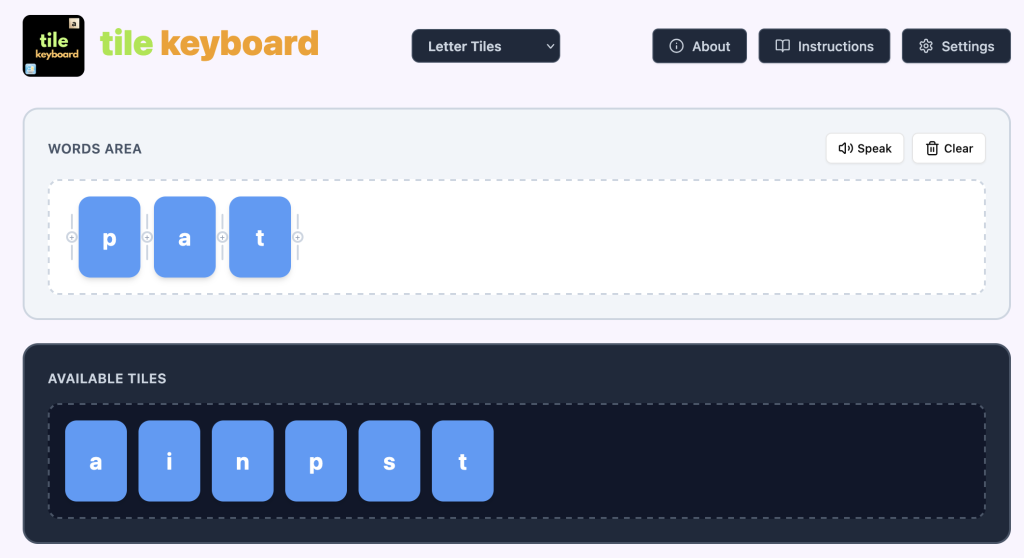
To support students and teacher to deliver the lessons from Simplified Systematic Synthetic Phonics, I have created an app called Tile Keyboard.
Tile Keyboard can be used by students to complete both the Making Words tasks in each lesson as well as the word sorts and any other activities. To access the appropriate resources, go to Settings and then enter the Lesson number. Once you have done this, the correct letters and the sorts and activities will be available. For more instructions, check out the instructions in the app.
Simplified Systematic Synthetic Phonics Book 1
- Simplified Systematic Synthetic Phonics Book 1 (updated Jan 2026)
- Resources for making folders for students to participate in lessons in Book 1 (if a non-electronic version is needed)
- Tile Keyboard (if an electronic version is needed)
Simplified Systematic Synthetic Phonics Book 2
- Simplified Systematic Synthetic Phonics Book 2 (updated April 2026)
- Resources for making folders for students to participate in lessons in Book 2 (if a non-electronic version is needed)
- Tile Keyboard (if an electronic version is needed)
Simplified Systematic Synthetic Phonics Book 3
- Simplified Systematic Synthetic Phonics Book 3 (updated April 2026)
- If a non-electronic version is needed for this book, use a non-electronic QWERTY keyboard
- Tile Keyboard
Making Words including Systematic Sequential Phonics
The approach recommended by Erickson & Koppenhaver (2020) and The Centre for Literacy and Disability Studies is a systematic, sequential phonics instruction program. In this program, students learn about phonics by manipulating letters and learning about the different sounds they make within real words. The Making Words approach aims for students to “learn by doing” and works well with students with intellectual disability and complex communication needs. The synthetic phonics program above is based on this approach.
If you prefer to use the original Making Words program, this is also included. The foundation level of the Making Words program is called Systematic Sequential Phonics They Use. The Centre for Literacy and Disability Studies has produced a simplified version of this program that you can download below, along with some resources to help you implement it.
- Simplified Systematic Sequential Phonics (modified to fit on A4 in Feb 2020)
- Making Words Folders for students to use
- Words to print for lessons and photos of sorts
High frequency and Irregular Words
The other skill that falls under Working with Words in Cunningham’s model is that students need is to build their ability to read sight words – and they need to read them more or less instantly. We learn a lot of sight words through sounding them out – but there are also a group of sight words, such as “the”, which are words that we have to learn as a chunk because we can’t sound them out. We use a word bank as our tool to do this – and I have written some blog posts that go through setting up a word wall or word bank and using it across a week.
As well as the phonics progression, the Literacy Hub has published a list of irregular words that cannot be learned through sounding out, that should be taught at the same time as phonics.
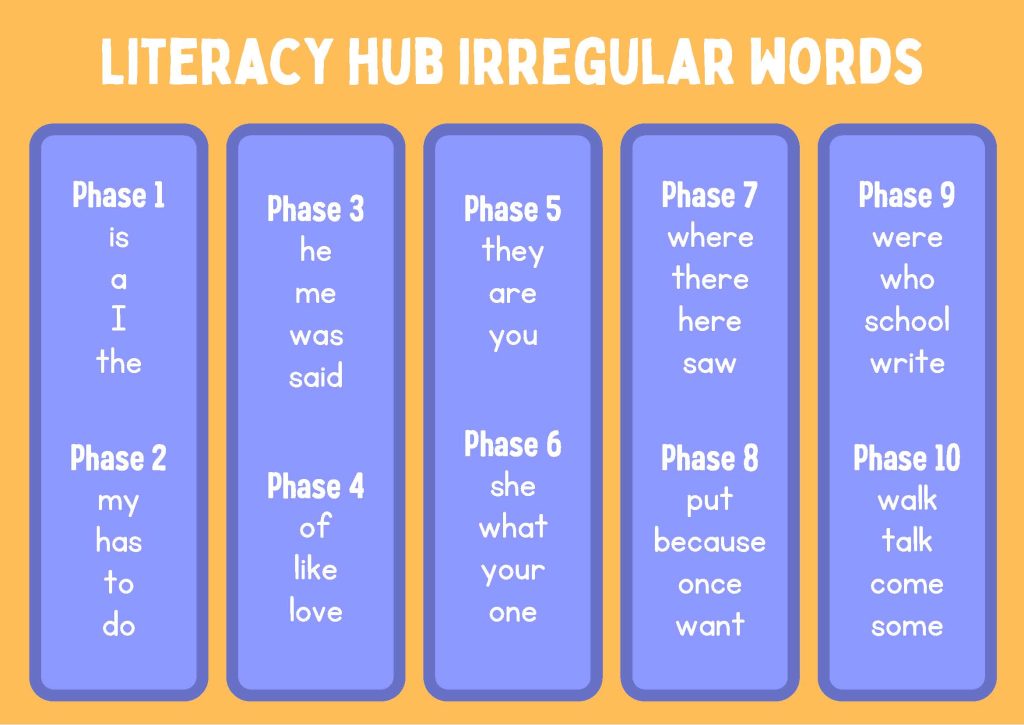
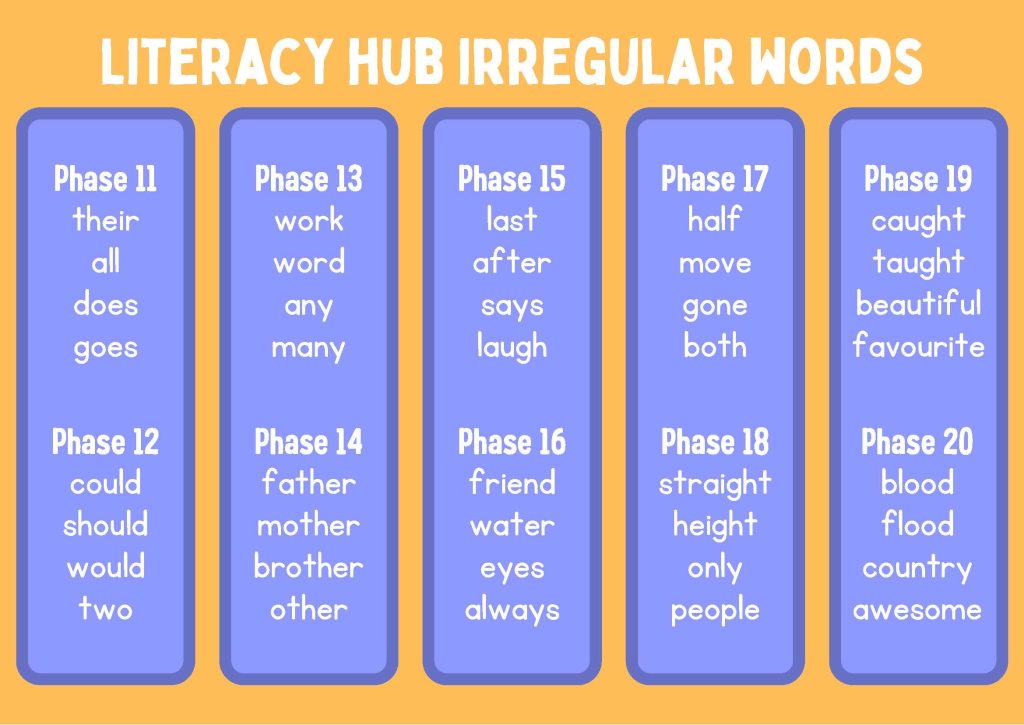
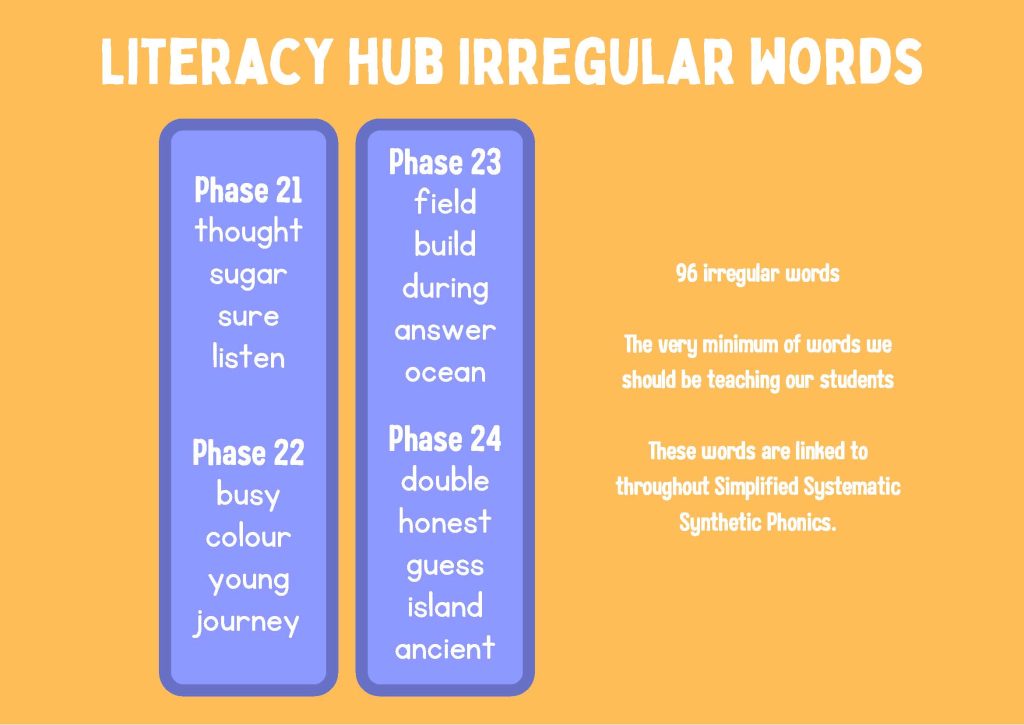
The list from the Literacy Hub is the minimum of words that we need to teach students. Generally, I suggest that you teach all the words on the Oxford Word List using a personalised word bank or word wall.
The Word Wall instructional strategies seem to be the critical component of comprehensive word instruction that makes the difference for students using AAC. This strategy, used along with Making Words, allow for the comprehensive word instruction to be more efficient. This may also be true for typically-developing students.” Professor Karen Erickson, 2022
Blog Posts on Word Wall from Jane Farrall designed to help you setup and implement Word Wall
- Word Walls: Getting the resources ready – this goes through a number of factors we need to consider and resources we need to make e.g. making up the words, deciding whether to use a large word wall or a portable word wall, etc.
- Word Walls: Planning a Year of Word Wall – this is a year of planning for students who are at the beginning of Foundation and can also be used as a structure for planning at other year levels. This post uses the old version of the Oxford Word List, which had fewer words in a different order
- Word Walls: Using the Word Wall – this takes you through the structure of a week of word wall and the structure of the year as well, including games to play with the words of the week and games to play with the words you need to consolidate
Word Wall Resources
- Portable Word Wall template and instructions (A4 version created July 2021)
- Oxford 500 Words formatted for Word Wall
- Word family words formatted for Word Wall
- Onset Rime and Sorts supporting resource from the Centre for Literacy and Disability Studies
- Personalised Key Word Decoding Strategy handout from the Centre for Literacy and Disability Studies
- Oxford 500 cards to print and use for activities – San Serif Font
- Oxford 500 cards to print and use for activities – Serif Font
- Word Wall Bingo – based on the old version of the Oxford Word List and the Planning a Year of Word Wall blog post above
- Oxford Words 1 to 20 Bingo (new version)
- Word Wall Cheers
- Fill in the Blanks Sheets to go with the Planning a Year of Word Wall blog post from a generous teacher
- Oxford 500 words Take Home wordlist from Oxford Word List website
- Using Word Sorts to Help Students Learn to Work with Words
Which words do I teach?
If you know a student has some sight word knowledge, but are not sure which words they still need to learn, then look at the resources on the Oxford Word List assessment page for assessing Oxford Word List knowledge.
Guess the Covered Word
For students at Foundation and above it is also great to play Guess the Covered Word and put their phonics and word knowledge to practical use.
You can play it low tech, or you can use this template:
Working with Words – Other Resources
Working with Letters, Sounds & Words in our Classrooms Overview Sheet
- Working with Letters, Sounds & Words in our Classrooms Overview Sheet (updated October 2020)
Working with Letters, Sounds and Words Self-Evaluation Forms for Educators
- Printable Letters, Sounds and Words self-evaluation or observation form (modified February 2024)
- Fillable Letters, Sounds and Words self-evaluation or observation form
- Engaging and Interactive Activities From Staff (a simpler form, which some schools have used with teacher aides or teachers)