Conventional Literacy Learners

Transitional and Conventional literacy learners are ready for conventional literacy instruction. Your school has access to assessment tools to help inform you about whether a student is transitional or conventional. In terms of literacy instruction, transitional literacy learners are working at Foundation level in Australian Curriculum. Conventional literacy learners are working at Foundation and above – and the conventional literacy assessment determines what level of instruction the student needs.
If you have a new student starting and you don’t have assessment data to work from, please use the four questions mentioned on the Home page to determine whether a student is emergent or is ready for conventional instruction.
Conventional Literacy Instruction
Each of the four areas of conventional literacy instruction need to happen every day with transitional and conventional literacy learners. This website has a different page for each area with resources and information. You can get to each page by clicking on the links below, or by using the conventional menu at the top of the page. There are four areas we need to work on with transitional and conventional readers and writers.
Models of Conventional Literacy Learning
On the Home page I referred to the text Comprehensive Literacy for All: Teaching Students with Significant Disabilities to Read and Write (2020) by Erickson and Koppenhaver. It is a thorough review of the research into assessment and teaching strategies we have in this area, put together to help teachers teach all of the students in their classroom.
Erickson & Koppenhaver (2020) present information in the text based on Cunningham’s model of Silent Reading with Comprehension, shown below.
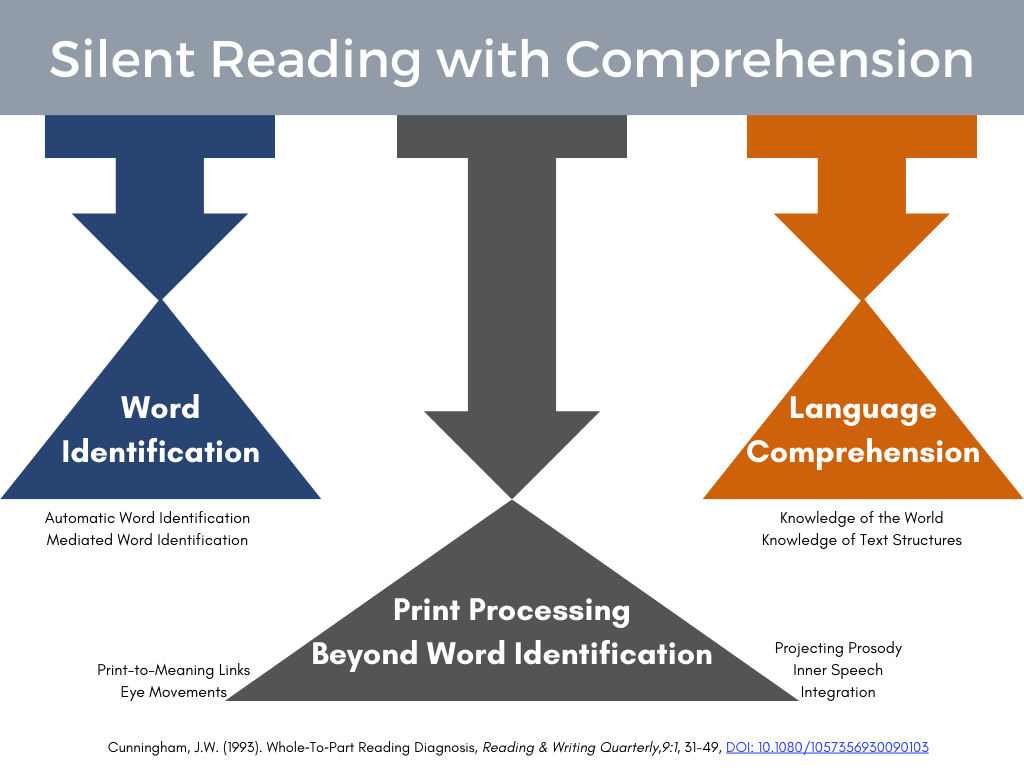
Cunningham’s model is based on the Simple View of Reading, as are many others. I discuss some of these in the blog post The Active View of Reading: Moving towards a more inclusive model of reading.
The Simple View of Reading was developed in an attempt to reconcile the two points of view in the 80s reading wars – to demonstrate that the people who believed in the bottom up view of reading (phonics) and the people who believe in the top down view of reading (language) both had a point. They proposed that there are two interdependent processes that lead to silent reading with comprehension. They also proposed that this lead to there being four different groups of readers. The two graphics below outline the original model and the four groups generated from it.
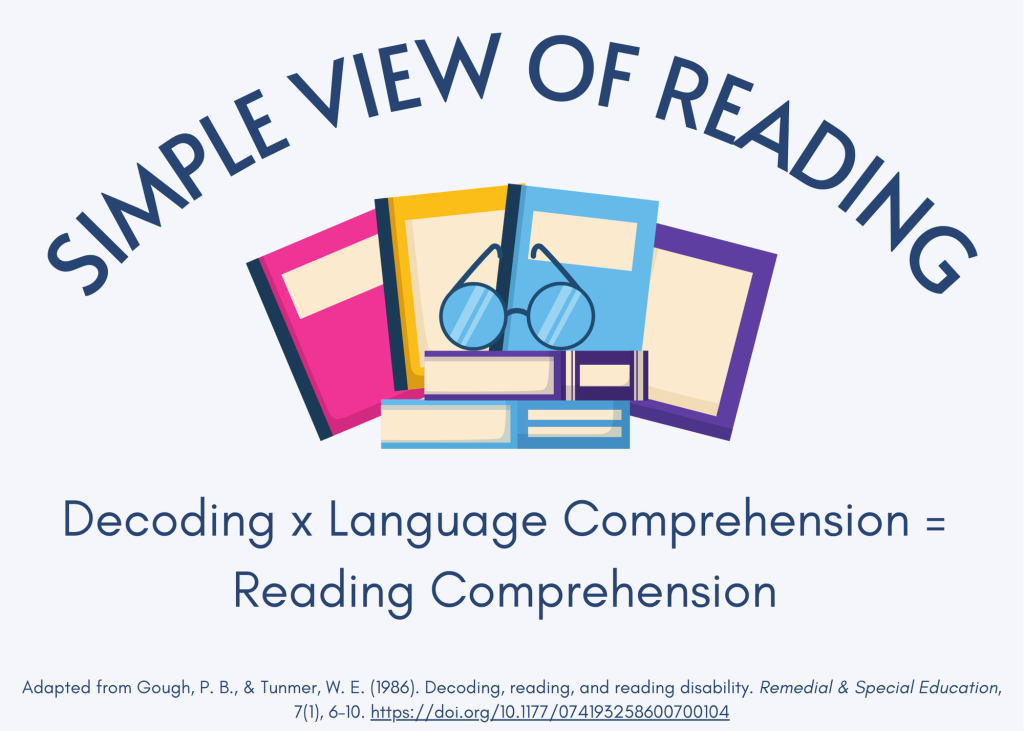
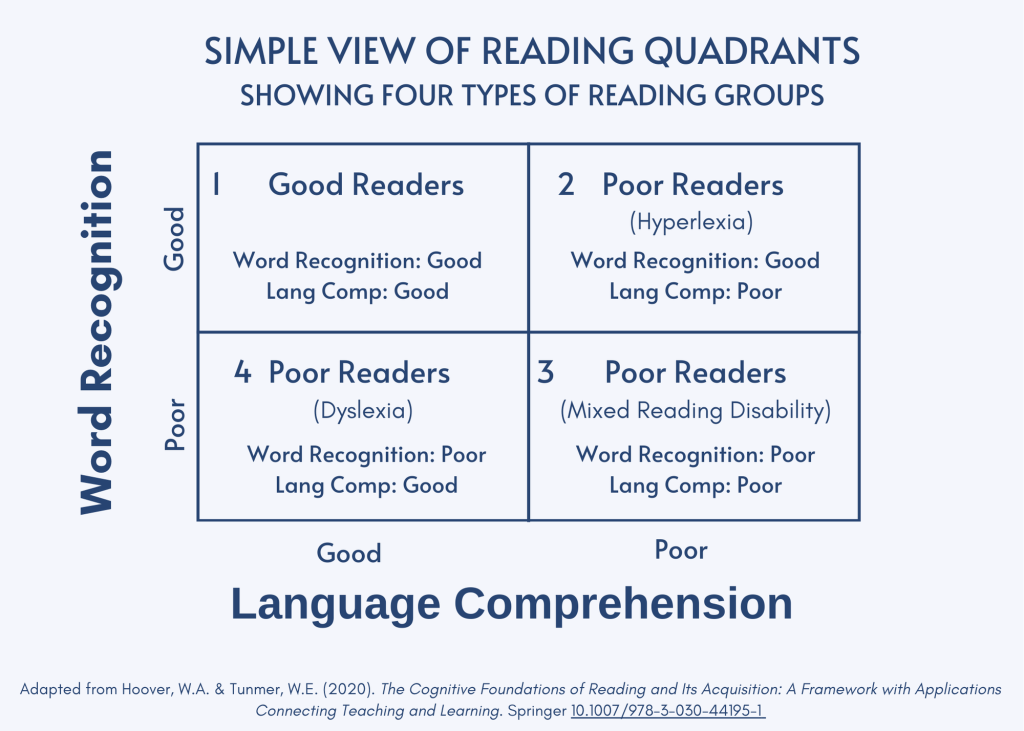
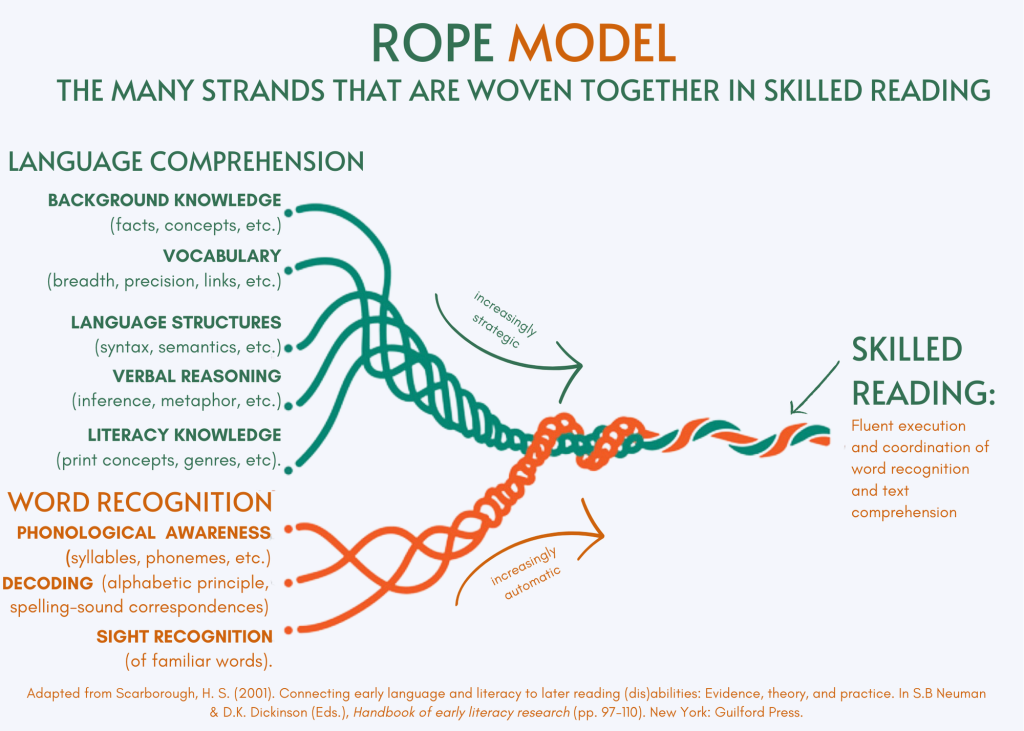
The difficulty with the Simple View of Reading is that it is too broad for teachers to guide instruction, as both decoding and language comprehension consist of a large number of sub-skills. And, additionally, fluent readers mostly use word recognition rather than decoding. This has led to a number of other models being created, based on the structure of the Simple View of Reading. These models break reading down into the various sub-skills that the overall literacy research has identified as being part of silent reading with comprehension. The graphics below show two of these models – Hoover and Tunmer’s Cognitive Foundations for Reading and Scarborough’s Rope Model. These models have been much more helpful for literacy teachers as they break the two broad areas from the Simple Model into the smaller constituent components. You’ll notice that both models also use the term “word recognition” rather than decoding as most fluent readers recognise the majority of words rather than decoding them.
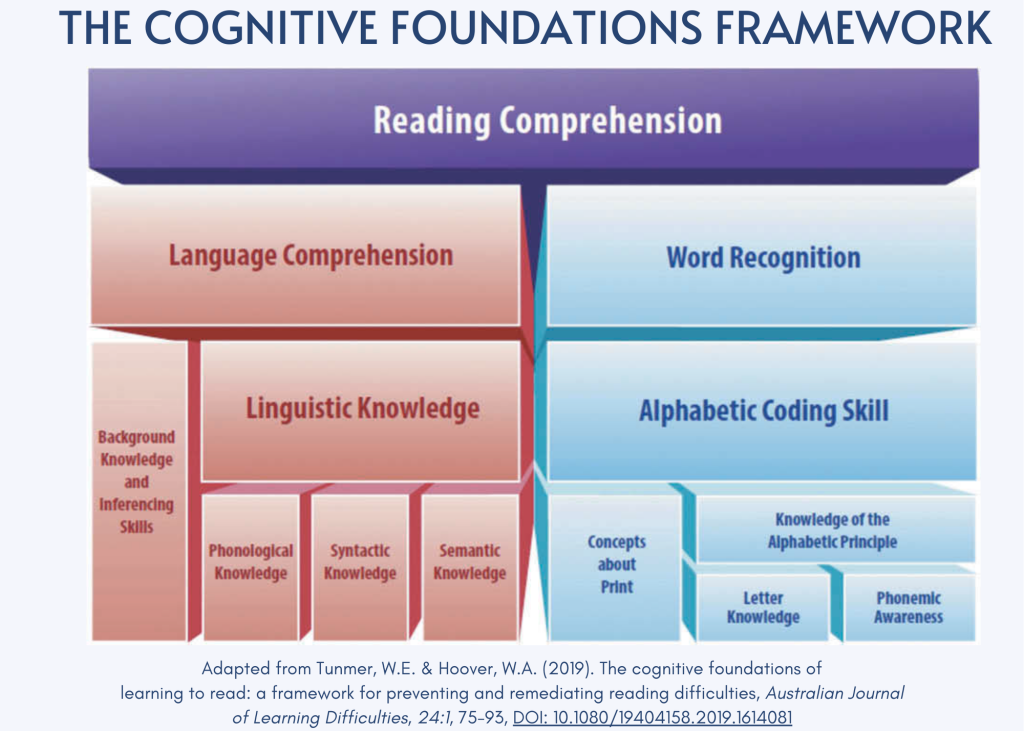
More recently, Duke and Cartwright have also used the Science of Reading and the Simple View to develop their own model. I love the addition of this model as it is more inclusive for many of our students. The original model was published in 2021 – and in 2022 a version with effect sizes was also published.
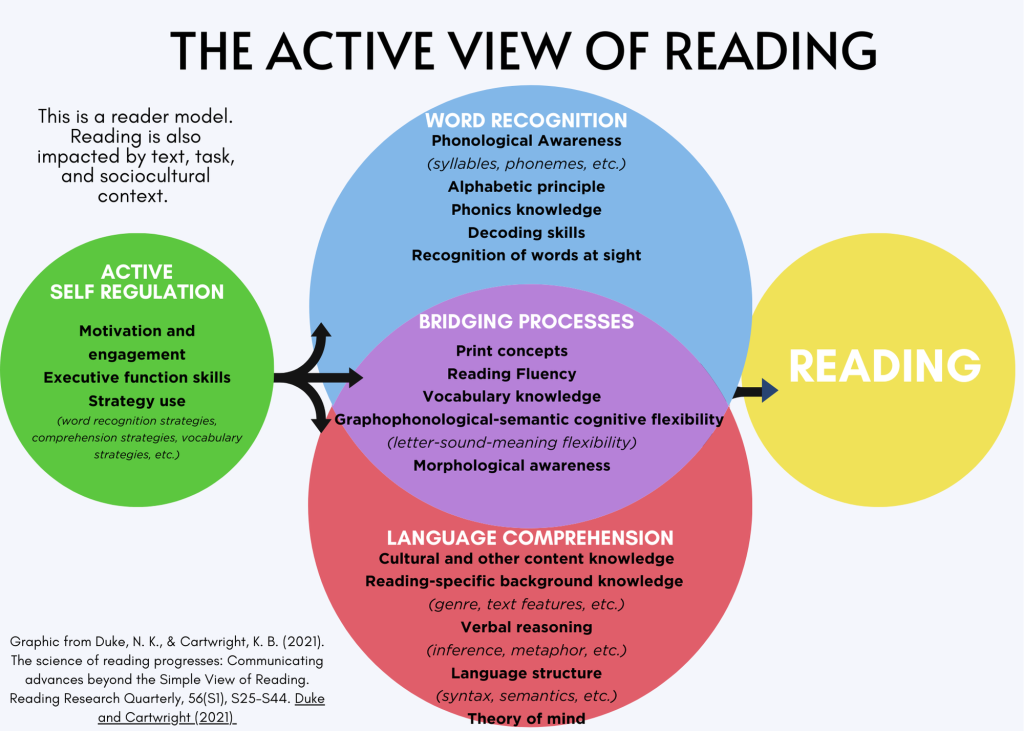
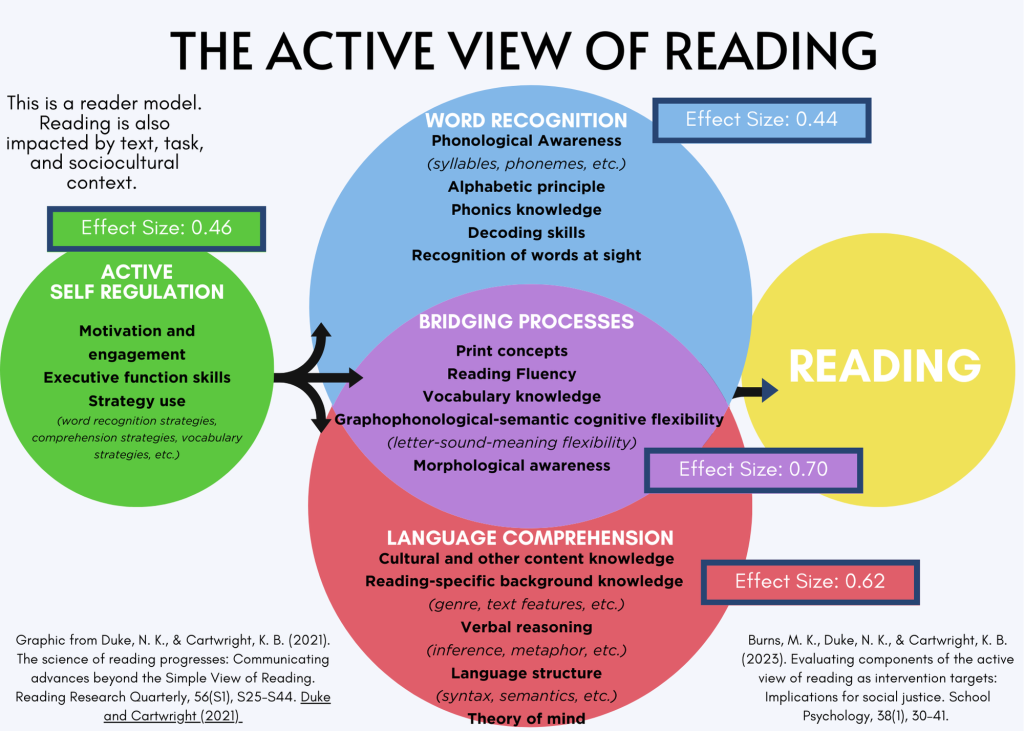
Our conventional literacy instruction needs to make sure that we address each of these sub-skills so that students move to reading silently with comprehension at one level higher. Oh – and some of these skills do start at the emergent level and so we need to begin addressing those at the emergent level as detailed in the emergent section of this website.